
Why this lesson matters
"I'm at 75% resistance, why did that hit still kill me?" is one of the most common new-player questions in POE2, and the honest answer is that the resistance cap is only one piece of a larger system. This lesson covers both halves: the resistance math itself, and the defense mechanics underneath it that actually determine whether a given hit is survivable. Primary attributes, defenses, Spirit, and controls is the first-pass version of the cap, penalty table, and hit order; this lesson is the "why you still die" half. The tools you press (and the ones that fire themselves) are Flasks and Charms: your active survival kit.
The 75% cap isn't your resistance number — your gear total is
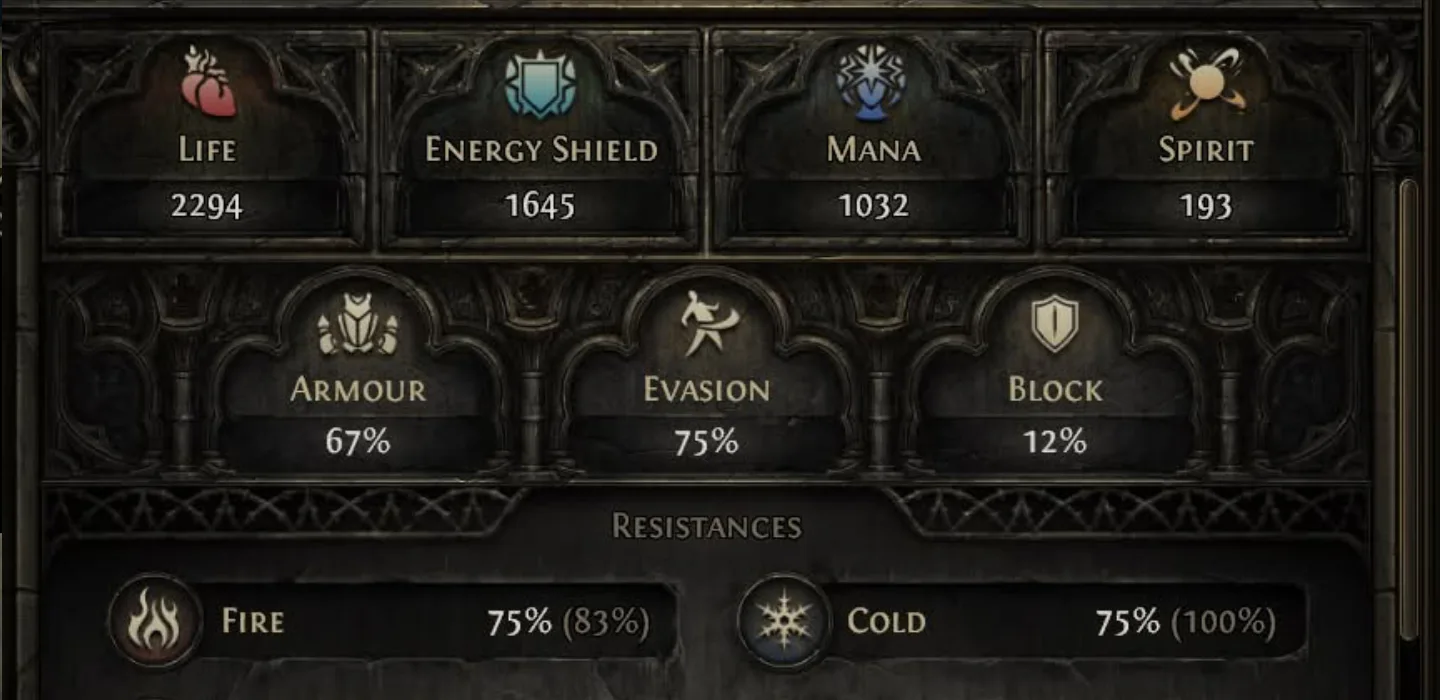
Every character has a hard elemental resistance cap of 75% (raisable to 90% with specific "Maximum Resistance" modifiers). But your actual resistance — Fire, Cold, Lightning, tracked separately — comes from gear, passives, and a handful of permanent boss rewards, and it can sit well below or even above that cap depending on what you've collected.
The campaign quietly taxes your resistance as you progress
This is the part that catches people off guard: your resistance total takes a permanent penalty at fixed campaign checkpoints, separate from the 75% cap itself. The cap doesn't move — what you need to reach it does.
| Checkpoint | Penalty | Resistance needed to hit 75% |
|---|---|---|
| Start of campaign | 0% | 75% |
| End of Act 2 | -10% | 85% |
| End of Act 3 | -20% | 95% |
| End of Act 4 (campaign complete) | -30% | 105% |
| Interlude, area level 54–59 | -40% | 115% |
| Interlude, area level 60–64 | -50% | 125% |
| Endgame maps, area level 65+ | -60% | 135% |
Three campaign bosses also hand out permanent resistance as an ordinary character-sheet stat, no different from a gear affix: Beira of the Rotten Pack (Act 1, Clearfell) grants +10% Cold, Sisters of Garukhan Shrine (Act 2, Spires of Deshar) grants +10% Lightning, and Blackjaw the Remnant (Act 3, Jiquani's Machinarium) grants +10% Fire — +20 percentage points total toward whatever your current checkpoint requires.
The practical read: track your resistance against the checkpoint you're actually at, not the scary -60%/135% endgame number. A fresh Act 2 character doesn't need 135% resistance — they need 85%.
Chaos Resistance plays by different rules
Chaos Resistance shares the same cap structure (75%, raisable to 90%) but is tracked separately from the three elemental resistances, and it's exempt from the campaign penalty entirely — the number you need to *cap* it never climbs the way Fire/Cold/Lightning do. Unlike those, it can only be raised through gear — there's no passive tree option for it.
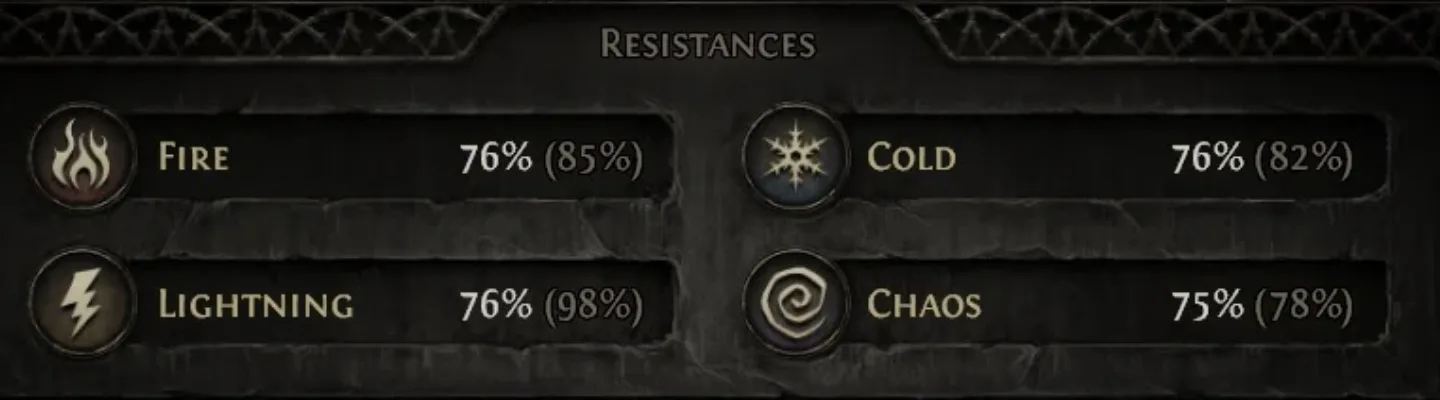
You don't actually need that cap. 0% Chaos Resistance is fine for the campaign — don't spend gear slots chasing it while you're still leveling. For endgame mapping, ~40% is the reference point top players are using: not a verified "safe" threshold and not a cap, just the number serious mapping characters tend to sit around, because fully capping Chaos competes with a lot of other gear priorities.
One honest gap, separate from those targets: nobody's been able to confirm what a fresh, ungeared character's *default* Chaos Resistance actually is. Check your own character sheet rather than relying on a remembered starting number.
What actually happens when you get hit
Resistance is one step in a longer sequence. Evasion is checked first — a successful evade means zero damage from that hit, though it doesn't apply against Spells. Then comes damage calculation, then Armour mitigates the physical portion of what lands (it does nothing against elemental or chaos damage — Armour and Evasion aren't alternatives, they stack and act at different stages). Then a Stun check, then finally your resource pools get drained.
That last step matters more than people expect. If you have Energy Shield, it depletes before your Life does — not alongside it, in sequence. Most damage that would hit your Life pool hits your Energy Shield first. Two important exceptions:
- Chaos damage doesn't skip your Energy Shield — it drains it at double the normal rate, and only the leftover (if any) hits Life, where your Chaos Resistance then applies.
- Bleed and Poison bypass Energy Shield completely and go straight to Life, no matter how much shield you're carrying.
That last point is the one that surprises Energy-Shield-focused builds specifically: a huge ES pool is real protection against most damage, but it does nothing against bleed or poison ticking away at your Life underneath it. If you're stacking ES, you still need a separate answer for those two ailments.
Ailments that don't work the way you might expect
A few POE2-specific rules are worth knowing explicitly, especially if any of your instincts come from other games in the series or genre:
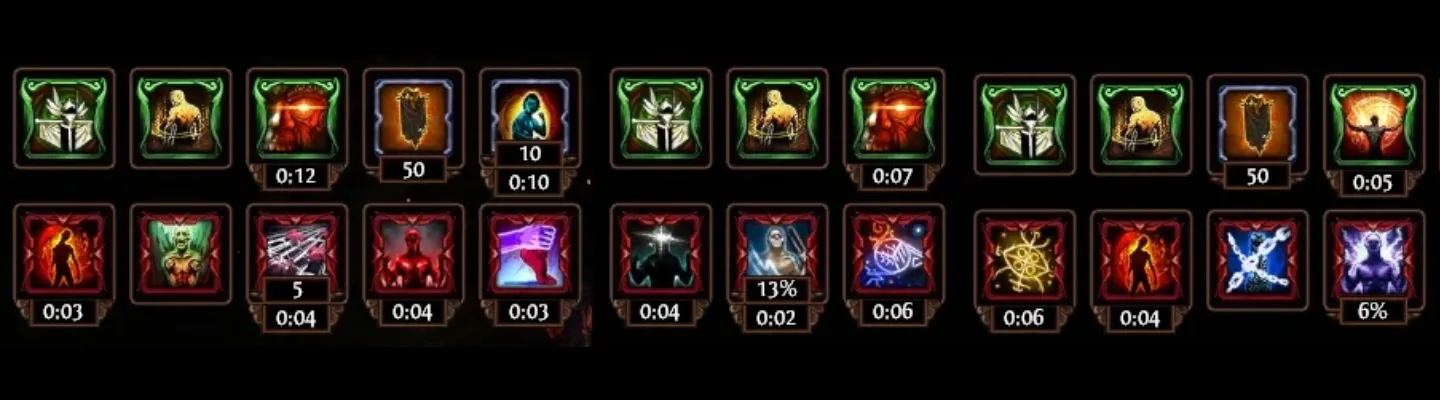
- Ignite and Shock don't stack. Only the single strongest instance of each is active on a target at a time, each running its own duration — landing a second, weaker ignite doesn't add to the first.
- Poison doesn't stack by default either. This is a deliberate, confirmed change from how poison worked in the original Path of Exile, where stacking poison was central to entire builds — that instinct doesn't transfer here.
- Bleed hits harder while you're moving — a bleeding character takes +100% extra bleed damage while moving (or "Aggravated"), so standing still during a bleed is a real, if situational, way to reduce the damage you take.
Block and Evasion won't save you by themselves
Both are legitimate defenses, but both are partial ones. Block caps at 75% without special modifiers, and even a successful block doesn't stop a Stun or a Freeze from landing — you can block a hit and still get frozen or stunned by it. Evasion is worse against certain damage types: it doesn't apply to damage-over-time at all, and many area-of-effect attacks bypass it too. Neither is a substitute for resistance and a solid life or Energy Shield pool — they reduce how often you get hit, not what happens when you do.
Worth being precise on Stun vs. Freeze here, since they're easy to lump together: Stun is a single mechanic, not a separate "ailment" version layered on top of the Stun step in the damage sequence above — for a player it's governed by a Stun Threshold equal to your maximum Life, and you can only take the brief version (Heavy Stun, the extended lockdown, only happens to bosses — see Boss stagger, Heavy Stun, and crowd control). Freeze is a genuinely different mechanic — a true ailment, governed by a separate Ailment Threshold (half your maximum Life by default) — that halts your character without the interrupt Stun causes. They're independent systems that happen to both slip through a successful Block.
Practical tips
- Check your resistance against your *current* checkpoint, not the endgame figure — a mid-campaign character chasing 135% resistance is solving the wrong problem.
- Pick up the three permanent boss resistance rewards (Beira, Sisters of Garukhan Shrine, Blackjaw) early — they're free, permanent, and count the same as gear.
- If you're building around Energy Shield, plan a separate way to handle Bleed and Poison — your shield won't see that damage coming. Staunching and Antidote charms are the usual answer; see Flasks and Charms.
- Don't import old poison-stacking habits from elsewhere in the series — POE2 caps ignite, shock, and poison to one active instance each.
- 0% Chaos Resistance is fine in the campaign; start aiming for ~40% in endgame maps — that's the reference point top players use, not a finish line and not a full cap.
- Treat Block and Evasion as damage-reduction tools, not full defenses — pair them with resistance and a real life or ES pool rather than relying on either alone.
Sources: Maxroll — Defence Guide · Mobalytics — Full Order of Operations: Damage & Defence · Mobalytics — Energy Shield · Mobalytics — Resistances · Mobalytics — Ignite · Mobalytics — Shock · Mobalytics — Ailments · Fextralife — Status Ailments · VULKK — Defences Explained · PoE2 Wiki — Resistance · Maxroll — Permanent Stats From The Campaign